
Loose leaf, explained
Tea brewed properly is a different drink entirely
Amusement Gratuit explains what temperature, ratio and water actually do, what distinguishes each category, and how to buy and store leaf well. We sell nothing and recommend no shops.
13Guides
6Tea categories covered
0Things for sale
Start here
The variable that changes everything
Boiling water suits some teas and ruins others, and the difference is why many people believe they dislike green tea.
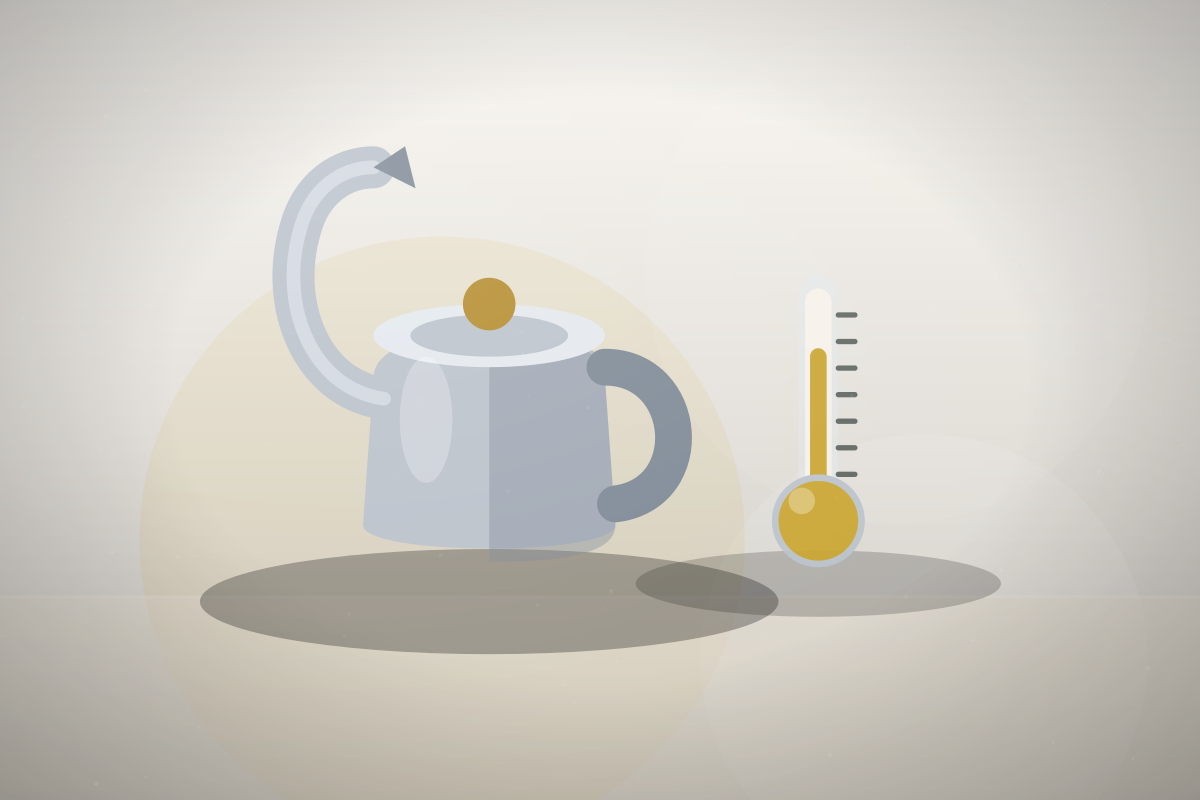
Water Temperature: Why Boiling Water Ruins Green Tea
Temperature determines which compounds you extract and in what order. It is the most consequential brewing variable.
It gives target temperatures for every category, practical ways to hit them without a special kettle, and explains why the same leaf tastes sweet at one temperature and bitter at another.
Read the full guideThree areas
Brewing, types, sourcing
How to make it, what the categories actually are, and how to buy and keep leaf well.

Recent guides
Published this year
Filter by area or read through. We sell no tea and take no commission from anyone who does.
Brewing and Water
Gongfu and Western Brewing: Two Approaches Compared
One method produces a single balanced cup. The other produces a sequence of changing ones. Both are legitimate.
24 January 2026
9 min read

Tea Types
Green Tea: How Processing Creates the Difference
The gap between Chinese and Japanese green tea comes down to how the leaf was heated in the first hour after picking.
19 January 2026
9 min read
Sourcing and Storage
Reading a Tea Label and Asking the Right Questions
Harvest date, origin and cultivar are the three things that matter, and most packets give none of them.
26 January 2026
8 min read

Tea Types
Oolong: A Spectrum Rather Than a Category
Oolong spans from almost green to almost black. Two teas with the same name can be entirely different drinks.
16 February 2026
9 min read
Sourcing and Storage
Storing Tea: The Four Things That Destroy It
Most tea that disappoints was stored badly rather than bought badly.
21 April 2026
8 min read

Brewing and Water
Leaf Quantity: The Variable People Guess At
A teaspoon of one tea weighs three times what a teaspoon of another does. Volume measurement cannot work.
12 February 2026
7 min read
Nothing filed under that heading yet — try another category.
Approach
How these guides are written
Four principles governing what appears here.
Taste comparatively
Claims are tested by brewing the same leaf with one variable changed and tasting side by side, blind where practical.
Explain by process
Categories are described by what was done to the leaf, because that determines the character far more reliably than regional labels.
Sell nothing
No shop, no affiliate links, no seller recommendations, no sponsored content of any kind.
Say what is uncertain
Where a claim is traditional but not established, or disputed among people with more experience, the guide says so.
Most people would improve their tea more by adjusting the water temperature than by spending three times as much on leaf. The first is free.Amusement Gratuit, editorial position
Longer guides
The detailed treatments
Guides on the categories where the detail genuinely changes what ends up in the cup.

Puerh: Raw, Ripe, and Why the Distinction Matters
Two teas share a name and are made by entirely different processes. Buying one expecting the other is a common disappointment.
Read the full piece
Water: The Ingredient That Is Ninety-Nine Percent of the Cup
Tea is almost entirely water. The mineral content of that water changes the result more than most people believe.
Read the full piece
Black Tea: What Region and Grade Actually Tell You
The grade letters on a packet describe leaf size and appearance, not quality. Almost everyone misreads them.
Read the full pieceWho writes it
The person behind the project
Fourteen years of drinking attentively and a refusal to open a shop.

Lian Ashworth
Lian has drunk tea attentively for fourteen years and has repeatedly declined to open a shop, on the grounds that it would compromise the only useful thing about this project.
She writes the brewing material and the oolong and white tea guides.
Nothing for sale
No shop, no affiliate links, no seller recommendations
Compared side by side
Claims tested by tasting variables against each other
Process explained
Categories described by how they are made
Reader letters
What readers write in
Selected from the contact form, published with permission.
★★★★★
I had written off green tea entirely. Brewed at seventy-five degrees instead of boiling, the same packet I had given up on was delicious. Slightly annoyed at the two wasted years.

Bettina KrauseReader, Leipzig
★★★★★
Bought a scale after the ratio article. My brewing is now consistent for the first time and I finally understand what I actually like.

Arun VaidyanathanReader, Chennai
★★★★★
The gongfu guide got me from one long steep to eight short ones with the same oolong. It genuinely tastes like a different and much better tea.

Fiona McAllisterReader, Inverness
★★★★★
A filter jug for hard water made more difference than the expensive leaf I had been buying. Cheapest improvement I have made.

Hendrik BakkerReader, Nijmegen
Questions
What readers ask most
Answered at length rather than briefly.
We do not recommend sellers, because having no commercial relationships is the only thing that makes this project useful and because the right seller depends on where you are. The label guide describes the questions to ask, and a seller who answers them well is the one to use.
Almost certainly the water was too hot. Green tea wants seventy-five to eighty-five degrees, and Japanese greens want less. Boiling water extracts bitter catechins rapidly and overwhelms the sweetness. Old tea is the second most likely cause.
No. A scale reading to 0.1 grams and a thermometer cover almost everything, and both are inexpensive. A gaiwan is worth having if you want to brew gongfu style, and it costs very little. Everything else is optional.
Green tea, six to twelve months from harvest. White and light oolong, about a year. Black tea, one to two years. Roasted oolong and puerh improve for years or decades if stored properly. Storage conditions matter as much as the category.
Not reliably. Price reflects rarity, labour intensity and marketing at least as much as quality in the cup. Some of the best value in tea is in categories that give many infusions, where an apparently expensive packet costs little per cup.
The project
Amusement Gratuit in numbers
Three writers, no shop, a great many comparative tastings.
14Years drinking attentively
13Published guides
0Things for sale
0Affiliate links
The steeping letter
Fortnightly: one new guide, one tea worth knowing about, and one reader question answered properly.
Used only for the letter. One click unsubscribes.