
Storing Tea: The Four Things That Destroy It
Airtight, dark, cool and away from anything with a smell. Four conditions, and most kitchens violate at least two.

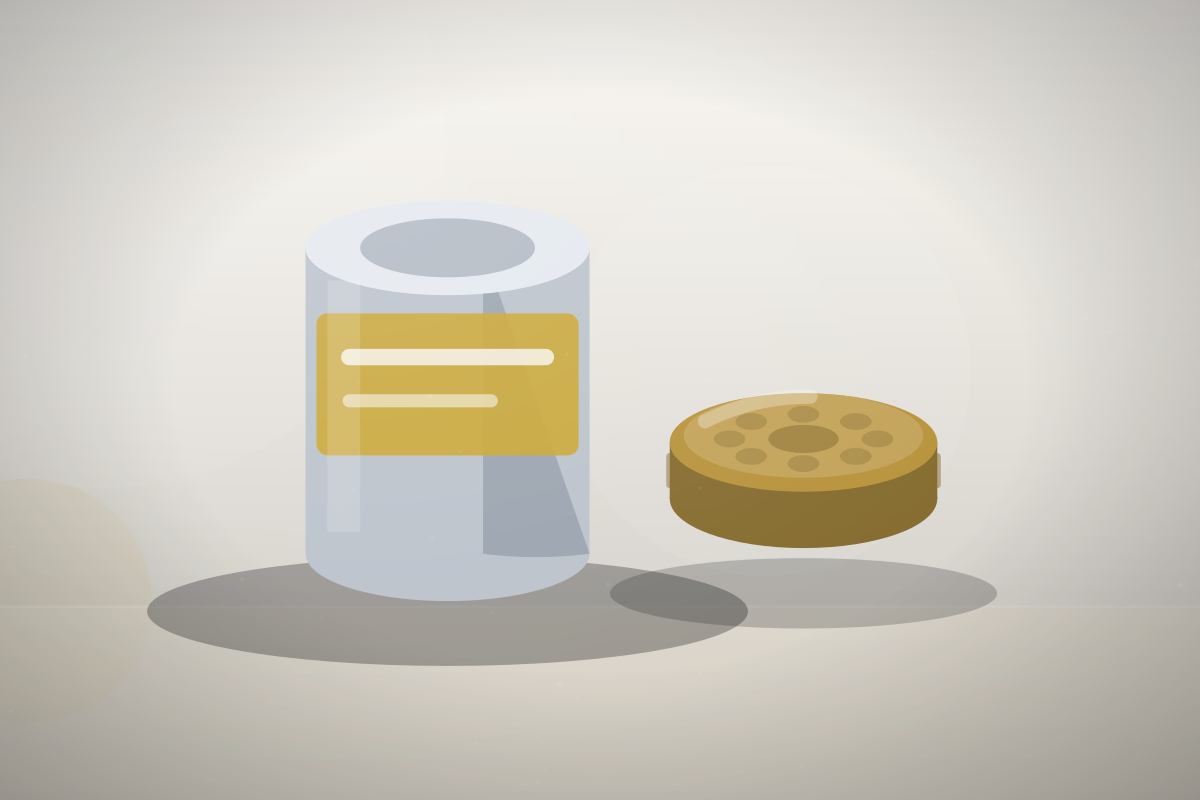
Tea is a dried agricultural product with a high surface area and considerable capacity to absorb whatever surrounds it. Stored badly it deteriorates within months; stored well, most categories keep for a year or more and some improve indefinitely.
The Four Enemies
What degrades tea
- Light. Accelerates degradation of aromatic compounds and chlorophyll.
- Heat. Speeds every chemical reaction, including the unwanted ones.
- Moisture. Causes staleness and, in sufficient quantity, mould.
- Odour. Tea absorbs surrounding smells readily and permanently.
A clear glass jar on a sunny kitchen shelf next to the spice rack violates all four. It is also, unfortunately, how a great deal of tea is stored, because it looks attractive.
Containers
| Container | Suitability | Notes |
|---|---|---|
| Opaque airtight tin | Excellent | The standard solution; inexpensive |
| Foil-lined resealable pouch | Very good | How most tea is sold; adequate for storage |
| Ceramic caddy with a good seal | Very good | Attractive and effective |
| Clear glass jar | Poor | Only if kept in a dark cupboard |
| Vacuum sealed | Excellent for fresh teas | Not suitable for teas that should age |
| Unglazed clay | For puerh only | Allows the air exchange ageing requires |
Category-Specific Advice
Not all tea wants the same conditions. Fresh teas want to be preserved unchanged; teas intended to age want controlled slow development.
- Green tea. Airtight, dark, cool. Refrigeration helps for high-grade Japanese greens if sealed against condensation.
- White tea, fresh. Airtight and dark. For deliberate ageing, allow some air exchange.
- Oolong, unroasted. Airtight and cool; drink within a year.
- Oolong, roasted. Airtight; ages well over years.
- Black tea. Airtight and dark; keeps a year or two acceptably.
- Puerh. Some air exchange, stable humidity around 60 to 70 percent, no odours.
The most common storage mistake is putting tea next to coffee or spices. Within a month it tastes of them, and the change is not reversible.Lian Ashworth
Refrigeration
Refrigerating tea is useful for high-grade fresh green teas and risky for everything else. The risk is condensation: tea removed from a cold environment attracts moisture from the air, and moisture in tea is the beginning of the end.
If you refrigerate, seal thoroughly, remove only what you need, and allow the container to reach room temperature fully before opening it. Never return warmed tea to the fridge repeatedly.
Quantity and Turnover
- Buy quantities you will finish within the tea's useful life.
- Fifty to a hundred grams is a sensible unit for most teas.
- Decant a working quantity into a small caddy and keep the bulk sealed.
- Every opening of a container exposes the contents to air and moisture.
- Label everything with the date you opened it as well as the harvest date.
Recognising Deterioration
Stale tea smells flat and papery rather than aromatic. Green tea loses its bright vegetal character and turns dull and hay-like. Oolong loses its floral lift. Black tea flattens into generic brownness.
None of this is dangerous; it is simply disappointing. Tea that has gone genuinely mouldy — visible growth, a musty cellar smell — should be discarded rather than brewed.
Long-Term Storage for Ageing
Teas intended to age need different conditions: some air exchange, stable moderate humidity, and complete absence of odours. Sealing them airtight largely halts development, which is fine if that is what you want and defeats the purpose if it is not.
A simple system that works
Opaque airtight tins, stored in a cupboard away from the cooker and the spice rack, labelled with harvest date and date opened. That covers every tea except puerh, costs very little, and prevents the great majority of storage-related disappointment.
Travel and Samples
Small foil pouches with a proper seal are excellent for samples and travel. Avoid paper bags and open tins, which offer no protection at all against any of the four enemies and are frequently used by shops for exactly the teas that need protection most.